When the original UK television series of Queer as Folk launched in 1999 it felt like a messy revolution. I was already done with the gay commercial scene by 1999 (or so I thought, but that’s another story) but Queer as Folk resonated in several opposing ways.
The scene of my adolescence was a northern English industrial town, surrounded by steelworks, the sky lighting up red as the slag was tipped, the sirens sounding across the town when the worker’s shifts changed. There’s a saying up there, dating back hundreds of years: “There’s nowt so queer as folk.” Which translates roughly into “There’s nothing as strange as people.” People would tut and roll their eyes at some perceived misdemeanour and smile and say “There’s nowt so queer as folk.”
But then queer was used in other contexts. It was a hissed word in school corridors, a warning, a way of being told what I was before I knew it myself. A warning to keep out of the way. There was nowt so queer as me.
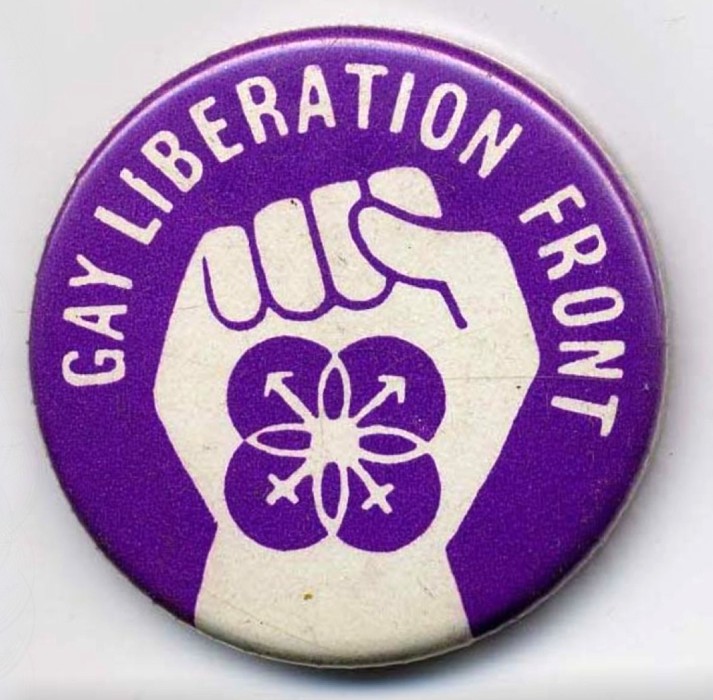
I did get out of the way and like hundreds if not thousands of provincial gay boys rejected from their families I got to London and started building a life at age 15 with an illegal sexuality. I marched with the Gay Liberation Front wearing the infamous purple fist badge in the early 70s and learned to accept myself as ‘Gay’. I’d only ever heard ‘Queer’ – never as identity, always as insult.
And even on those Gay Liberation Front marches we heard it again from spitting onlookers ‘Dirty Queer’. We tried to tell ourselves that ‘Gay’ stood for ‘Good As You’. It was the kind of slogan we repeated until we almost believed it. I’d only ever heard ‘gay’ in the context of Bright Young Things in the 1920s and though I was having a gay old time it wasn’t all costume parties and champagne.
Queer as Folk gave a narrow, sex‑heavy, issue‑light portrayal of gay life, foregrounding club culture, casual sex and hedonism. I didn’t associate with that either.
Years later, I was still having problems associated with being queer. I thought queers had to look queer, behave in a queer way, and in fact I was looking at queerdom in exactly the same way the uninformed looked at homosexuality in the 70s.
And then I looked at my bookcase: ‘Queer London: Perils and Pleasures in the Sexual Metropolis 1918-1957’, ‘A Queer Inheritance’, ‘Straight Acting: Shakespeare’s Many Queer Lives’, ‘Some Men in London: Queer Life (two volumes covering 1945 to 1967), among others, and it slowly dawned on me. There was no getting away from it. Reading queer lives through a modern lens was an eye‑opener. I mean, I’ve been a drag queen and I’ve been a leather queen, but even then I never saw myself as queer. Now you can enrol in Queer Studies courses at the Universities of, among others, Amsterdam and York.
And now here it is: Queer After Everything, printed at the top of my own site, quiet and unapologetic. I didn’t reclaim it in a single moment. It returned to me slowly – through books, through other people’s courage, through the long work of living. This blog begins, I suppose, with the question of how a word can wound you and still become the one you choose to walk with – and what it means to live a life after that.
These issues possibly only arose as a native English speaker. In my mid-forties I upped sticks and left England for the Netherlands where I had to get used to the perfectly respectable use of the word ‘homo’. But that’s a story that belongs to another corner of this unfolding life.

 Queer After Everything